Last Updated: October 30, 2026
Quick Summary
Emergency towing is rarely covered by liability insurance, which pays for damage your truck causes to others. Physical damage coverage may reimburse a tow only after a covered event like a collision or theft recovery, while roadside assistance memberships pay for the service itself. Many fleets carry both.
- Liability pays for the other guy; physical damage pays for your truck and can include tow reimbursement.
- A roadside assistance membership pays for the service, while insurance reimburses a loss after the fact.
- Every commercial roadside plan is priced off four levers: mileage cap, heavy-duty surcharge, per-incident limit, and frequency caps.
- Most plans cover towing, jump-starts, lockouts, fuel delivery, and tire changes but exclude accident recovery, winching, and storage.
- Notify your insurer or program within 24 hours and submit the itemized invoice, photos, and driver statement together.
Table of Contents
- Emergency Towing for Commercial Trucks: What Insurance Actually Covers
- Emergency Towing and Recovery Options for Heavy-Duty Vehicles
- What Commercial Roadside Assistance Cost Looks Like and What It Buys
- Covered Services vs. Excluded Services in a Towing Reimbursement Plan
- Trucking Insurance Claim Documentation You Need Before the Tow
- How to File a Commercial Vehicle Insurance Claim for Towing Reimbursement
- Heavy-Duty Towing Cost Drivers and Reimbursement Limits
- Fleet-Level Reimbursement Workflows and Denied Claims
- Frequently Asked Questions
Emergency Towing for Commercial Trucks: What Insurance Actually Covers
Emergency towing reimbursement for commercial trucks is the portion of a tow bill an insurer or program pays back after a breakdown, and the rules depend entirely on which policy you hold.
The short answer: liability coverage pays for damage your truck causes to others, not to move your truck.
That distinction decides who writes the check. Below: which policy pays, what a plan costs, what documentation survives a claim review, and how fleets handle reimbursement at scale.
Liability vs. physical damage: which policy pays for a tow
Liability pays for the other guy; physical damage pays for your truck, and that is where a tow reimbursement can live. Most commercial auto policies treat towing as part of the physical damage claim, so a tow tied to a collision, rollover, or theft recovery is more likely to be reimbursed than one for a mechanical failure, the gap most owner-operators discover at the worst moment. For whether a repair itself is covered, our guide on whether truck repairs are covered by insurance breaks down the coverage lines.
Why roadside assistance memberships and insurance are not the same thing
A roadside assistance membership pays for the service. Insurance reimburses a loss. That single sentence explains most billing disputes in this category.
Membership plans dispatch a provider, cover a set tow distance, and handle the call. Insurance responds after the fact and only when the breakdown ties back to a covered peril. Neither replaces the other, which is why many fleets carry both: membership for the routine breakdown, physical damage for the expensive event.
Emergency Towing and Recovery Options for Heavy-Duty Vehicles
Heavy-duty towing and recovery is the process of moving a Class 7 or Class 8 truck, and often its trailer, with equipment rated for the combined weight. Options fall into four buckets: a heavy wrecker for a straight tow, a rotator for a rolled or off-road unit, a flatbed or lowboy for a disabled tractor, and a mobile mechanic for anything that can be fixed on the shoulder.
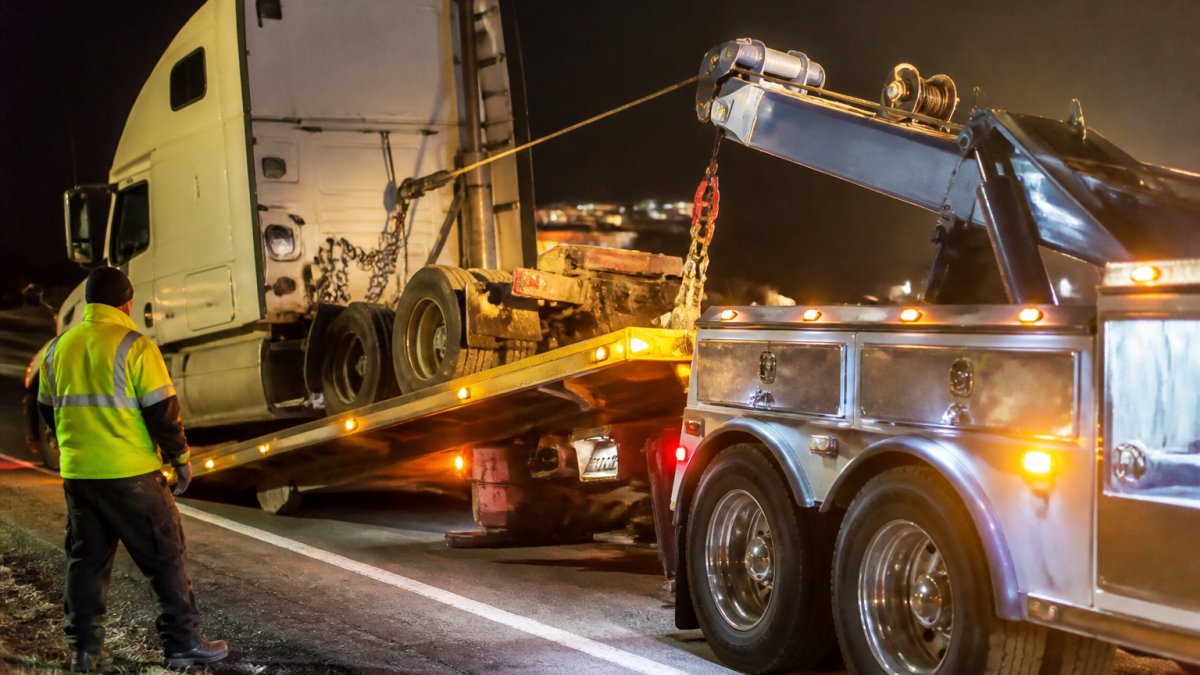
Which one shows up changes the bill more than anything else. A wrecker with a standard boom handles a routine hook; a rotator, the crane-equipped rig used for recovery, costs far more per hour and usually needs a second unit on scene.
Police-ordered tows, storage fees, and who pays
A police-ordered tow happens when an officer calls for removal, usually after a crash, a hazard, or an abandoned-vehicle call. The officer chooses the provider, and the provider bills whoever ordered the removal or the registered owner.
Storage is the charge that surprises people. Once the truck sits in a yard, daily fees accrue and a lien can follow.
What Commercial Roadside Assistance Cost Looks Like and What It Buys
Commercial roadside assistance pricing is typically quoted per vehicle or per fleet, and the quoted price tells you little until you review the benefit design. Pricing depends on plan terms; contact Total360™ or visit total360.com for current pricing or a quote. Two plans can carry the same monthly figure and deliver wildly different value once a Class 8 tractor is on the shoulder at 2 a.m.
The four cost levers in every commercial plan
Every commercial roadside plan is priced off four levers. Understanding them lets you compare quotes apples to apples.
- Tow mileage cap. A plan covering 15 miles of tow is not the same product as one covering 75, even at the same monthly figure. Mileage beyond the cap is billed back at the provider’s per-mile rate, and heavy-duty rates run well above light-duty rates.
- Heavy-duty surcharge. Class 7 and Class 8 trucks, and anything with a trailer, usually trigger a surcharge over the base light-duty rate. Ask whether it is baked into the plan or billed per incident.
- Per-incident reimbursement limit. The ceiling the plan pays on a single event. A rollover recovery with a rotator, a second unit, and a cargo transfer can exceed a modest cap several times over.
Membership versus pay-per-use versus bundled benefit
There are three ways to buy the same service, and the cash-flow difference matters as much as the price.
- Membership plan. A recurring per-vehicle or per-fleet fee. The plan dispatches a provider and covers a set tow distance, usually paying the provider directly so the driver does not front the bill.
- Pay-per-use. No recurring fee; you pay the full tow bill at the scene and seek reimbursement afterward if you have coverage. Most expensive per event and hardest on driver cash flow.
- Bundled reimbursement benefit. A towing reimbursement benefit folded into a broader equipment repair or roadside program. Programs like Total360™ sit in this lane, closing part of the gap between the real bill and a standard plan cap.
Questions that decide your cash flow
Ask three questions before you sign, and get the answers in writing:
- What is the per-incident tow limit, and does it reset annually or per event?
- Does the plan cover heavy-duty recovery and rotator service, or only light-duty towing?
- Is the benefit paid to the provider directly, or reimbursed to you after you pay?
That third question decides your cash flow. Direct-pay plans keep the driver from fronting a tow bill at 2 a.m.; reimbursement plans put the burden on the fleet until the claim clears. A plan promising “full reimbursement” without stating the mileage cap, heavy-duty surcharge, and per-incident limit is telling you half the story.
Covered Services vs. Excluded Services in a Towing Reimbursement Plan
Covered services are the roadside events a plan pays for; excluded services are the ones it does not. Most plans cover towing, jump-starts, lockouts, fuel delivery, tire changes, and minor roadside repairs. Understanding these distinctions helps operators avoid unexpected out-of-pocket costs, especially when applying safe towing tips to ensure a vehicle remains secure during transit.
Read the exclusions first. They are where the money is lost.
Tire, battery, fuel, lockout, and emergency repair support
The core services break down in predictable ways:
- Flat tire and tire service: mounting a spare is usually covered; buying a replacement tire usually is not.
- Jump-start and battery service: a jump is covered; the new battery is your cost.
- Fuel delivery and fluids: the delivery is covered; fuel and coolant are billed to you.
The pattern holds across the industry: the service call is covered, the parts and materials are not.
Trucking Insurance Claim Documentation You Need Before the Tow
Trucking insurance claim documentation is the paper trail that decides whether a reimbursement gets paid or denied. Collect it before the truck moves, once the driver leaves the scene, the photos and itemized invoice are the only evidence left.
Gather this at the scene:
- Photos of the truck, the failure point, and the odometer
- The tow provider’s itemized invoice showing hook fee, mileage, and any surcharges
- The dispatch record or incident number from the provider
Miss the itemized invoice and you will be arguing about a lump sum with no breakdown. Most denials trace back to a missing document, not a missing coverage.
How to File a Commercial Vehicle Insurance Claim for Towing Reimbursement
Filing a commercial vehicle insurance claim for a tow starts with a call to your insurer or program the same day, followed by the documentation package. Speed matters because reimbursement windows are short and memories fade.
A step-by-step reimbursement checklist for fleet managers
- Notify the insurer or program within 24 hours. Get a claim number and the name of the adjuster.
- Confirm the tow was authorized. If a police officer ordered it, note the report number.
- Submit the itemized invoice, photos, and driver statement together. Do not send them in pieces.
- Confirm the reimbursement limit against the invoice. Flag any amount above the cap early.
- Track the claim in writing. Email follow-ups beat phone calls for a paper trail.
- Escalate at the stated response window. If the program promises a response time, hold it to that time.
- Reconcile the payment against the invoice. Partial payments are common; know the gap.
Fleet managers who run this checklist on every incident spend less time chasing money. If you want to see how a program handles the coverage side, the coverage details and claims process page lays out what is included. When you are ready to move, you can start a claim directly.
Heavy-Duty Towing Cost Drivers and Reimbursement Limits
Heavy-duty towing costs more because the equipment costs more to own and run. The main drivers are vehicle weight, equipment type, distance, time of day, and whether recovery is involved.
Reimbursement limits rarely match the real bill on a heavy recovery.
The main cost drivers and the reimbursement reality on a heavy recovery break down like this.
| Item | Value | Note |
|---|---|---|
| Vehicle weight | Main cost driver | Heavier units cost more to move |
| Equipment type | Main cost driver | Rotator costs far more per hour than a wrecker |
| Distance | Main cost driver | Mileage beyond a plan cap is billed back |
| Time of day | Main cost driver | A rotator on a weekend night outprice a standard wrecker |
| Recovery involved | Main cost driver | Rollover recovery with two trucks can exceed a cap several times over |
| Reimbursement limits | Rarely match the real bill | Know your cap before the breakdown and budget the gap |
| Standard Towing Reimbursement Benefit | On plans of 12 months or longer | May help narrow the gap, though it may not cover the full cost |
Fleet-Level Reimbursement Workflows and Denied Claims
Fleet-level reimbursement is a workflow problem, not a coverage problem. When 20 trucks break down across a year, the difference between a smooth program and a painful one is whether one person owns the process and whether every driver follows the same sequence. A fleet-level approach goes beyond filing a claim: it defines who authorizes the tow, who holds the vendor records, and how reimbursement is tracked across dozens of incidents.
Driver authorization: the first control point
A driver on the shoulder at 2 a.m. should not be improvising. Give every driver a one-page authorization card that states:
- The maximum dollar amount a driver may authorize without dispatch approval.
- The approved provider list, or the dispatch number to call for a vetted provider.
- The requirement to get an itemized invoice and a dispatch or incident number before the truck moves.
Drivers who know the authorization limit and the document pack produce clean claims. Drivers who improvise produce lump-sum invoices and denials.
Centralized claims tracking
Assign a claims owner and log every incident in one place. A working log captures, at minimum:
- Date, truck number, and driver.
- Provider name and dispatch or incident number.
- Invoice amount, amount reimbursed, and the gap.
That log tells you which provider is slow, which coverage line keeps denying, and which truck class drives the most out-of-pocket spend. Without it, a fleet is guessing.
Vendor records and downtime reduction
Keep a vendor file for every approved provider: rate sheet, heavy-duty surcharge, per-mile rate, and storage daily fee. Vendors with clean itemized invoices and direct-pay arrangements can reduce both out-of-pocket expense and downtime, because the truck can roll as soon as the service is done instead of waiting on a reimbursement check. Pre-negotiated rates with two or three vetted heavy-duty providers in each lane you run beat a marginally lower membership fee.
When reimbursement is denied or delayed
Denials and delays usually come from four causes: a missing itemized invoice, a tow outside the covered event, an amount above the per-incident cap, or a late filing. Appeal in writing, attach the full document pack again, and cite the specific coverage language. If the program offers an expedited channel, use it. Total360™ offers a 24/7/365 claims reimbursement option, with a 60-minute customer response time. For the coverage question behind the denial, towing reimbursement coverage explains what the benefit does and does not pay.
Run the same document pack on every incident, even the small ones. A fleet that standardizes the pack spends less time chasing money and more time moving freight.
Frequently Asked Questions
Does commercial truck insurance cover emergency towing?
Most commercial auto policies do not include emergency towing as a standard benefit. Towing may be covered only when it results from a covered collision or comprehensive claim, and even then it is usually subject to deductibles and coverage limits. Many fleets add a towing reimbursement benefit or roadside assistance membership to cover breakdowns, flat tires, and lockouts that insurance excludes.
What trucking insurance claim documentation is required for towing reimbursement?
Keep the tow invoice showing the date, location, mileage, and itemized charges; the dispatch or service call record; photos of the breakdown; the driver’s written incident report; and proof of payment. For insurance claims, include the police report number if a police-ordered tow was involved. Missing itemized invoices are the most common reason a reimbursement is reduced or denied.
Are there mileage limits on commercial truck towing reimbursement?
Mileage limits vary by provider and plan. Some roadside memberships cover tows up to a set distance, such as 75 miles, before per-mile charges apply. Insurance-based reimbursement may cap the total dollar amount rather than the distance. Check the plan’s coverage limits before you dispatch a tow, because heavy-duty tows beyond the limit become an out-of-pocket cost.
How long does it take to get reimbursed for emergency towing?
Timelines depend on the provider. Insurers often take several business days to weeks to process a claim after all documentation is received. Some plans offer expedited claims reimbursement with response times measured in hours rather than days. Submitting a complete claim package on the first attempt is the fastest way to avoid delays.
Breakdowns do not schedule themselves, and neither should your reimbursement. Total360™ covers more than 500 components across Class 2-8 vehicles up to 30 years old, with no inspections, no mileage caps, and a Standard Towing Reimbursement Benefit on plans of 12 months or longer. Get started with Total360™ and turn a roadside emergency into a claim you can track.