
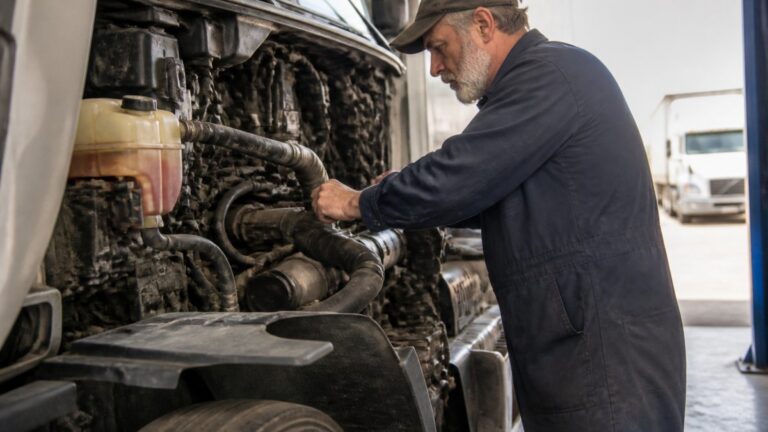
Last Updated: November 2, 2026
Quick Summary
Repair coverage for older commercial trucks is worth it when a plan accepts your truck’s age and mileage and lists the components most likely to fail. Total360™ covers Class 2-8 vehicles up to 30 years old with over 500 components, no inspections, and no mileage caps.
- Traditional extended warranties often set age and mileage ceilings that exclude aging tractors.
- Compare your unscheduled repair spend per truck over the past 24 months against the quoted premium.
- Insurance pays for accidents, theft, and weather, while repair coverage pays for mechanical breakdown.
- Total360™ includes a Standard Towing Reimbursement Benefit on plans of 12 months or longer.
- Get authorization from the claims line before any repairs begin.
Table of Contents
- Why Older Commercial Trucks Face a Repair Coverage Gap
- What Repair Coverage for Older Commercial Trucks Actually Covers
- Commercial Truck Extended Warranty Options for High-Mileage Fleets
- Commercial Truck Insurance vs. Repair Coverage: What Each Pays For
- How Repair Coverage Changes Fleet Maintenance Costs and Budgeting
- Truck Towing Reimbursement and Downtime Protection
- How to File a Claim and Get Your Truck Back on the Road
- Get a Quote for Your Fleet’s Repair Coverage
- Frequently Asked Questions
Why Older Commercial Trucks Face a Repair Coverage Gap
A 15-year-old semi with 800,000 miles is a business asset, not a liability, but many coverage products treat it like one. That gap is exactly where repair coverage for older commercial trucks earns its place.
At Total360™, we built our program around that gap: coverage for Class 2-8 vehicles up to 30 years old, with no inspections, no mileage caps, and no qualifications required.
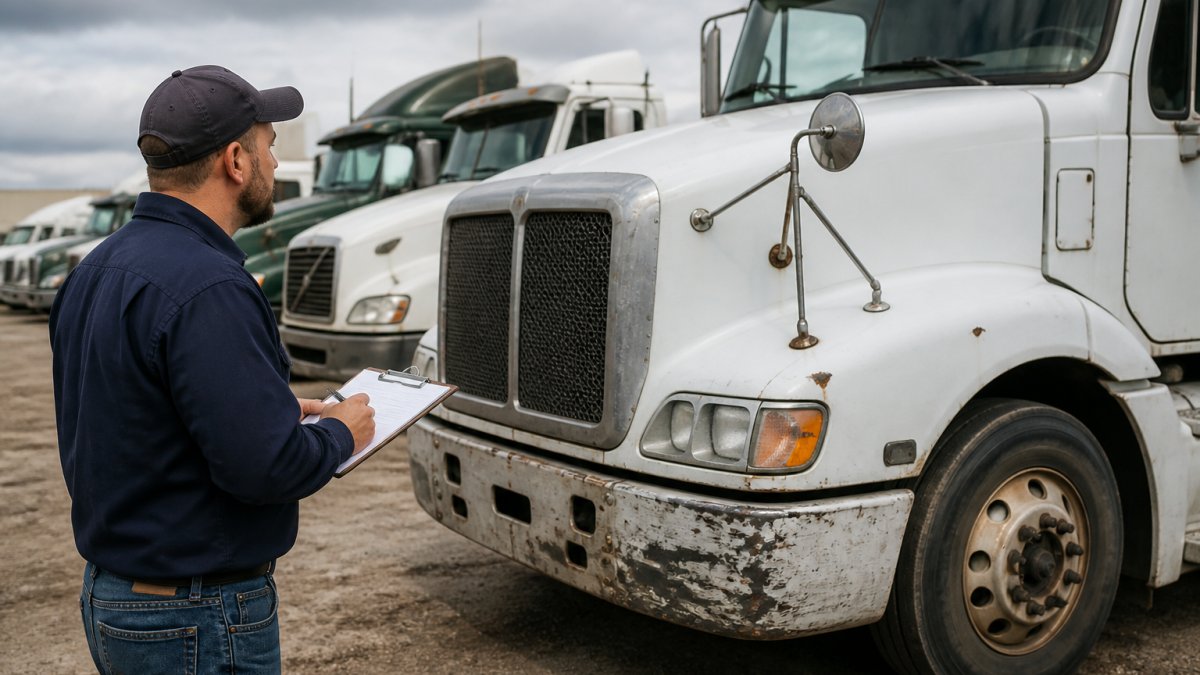
A truck with no book value and a failing transmission is a decision point: pay out of pocket or park the unit. Coverage turns that decision into a predictable line item.
What Repair Coverage for Older Commercial Trucks Actually Covers
Repair coverage is a service contract that reimburses or pays for specified mechanical repairs after a breakdown, distinct from insurance because it addresses component failure rather than accidents. On an older truck, the contract’s value is decided less by the headline component count than by the fine print governing whether a specific failure on a specific unit is payable.
Component count is where providers separate. Total360™ covers over 500 components, which matters most on high-mileage vehicles where failures cluster in expensive systems.
Covered Components and Eligible Repairs
Confirm which components are covered before you commit, since the parts that drive the largest out-of-pocket costs on aging trucks must appear on the covered list. Ask whether a plan covers labor at a repair facility of your choice or only at network shops.
Before you commit, run through an item-by-item check of which components and repairs qualify against your maintenance history.
Exclusions, Pre-Existing Conditions, and Wear and Tear
Every plan has exclusions, and older trucks are where they bite. The four contract terms that most often decide an older-truck claim are pre-existing conditions, wear-and-tear definitions, inspection requirements, and waiting periods.
Pre-existing conditions. A pre-existing condition is generally a failure or symptom that existed before the contract’s effective date, whether or not it had been diagnosed.
Wear and tear versus mechanical breakdown. Wear and tear is generally gradual deterioration from normal use, brake friction material, clutch lining, belts, hoses, tires, batteries, filters, and fluids.
Inspection requirements. Some providers require a pre-coverage inspection, and on an older truck that inspection can surface conditions that limit or exclude coverage.
Parts availability and labor rates. On older trucks, a covered failure can still leave a gap if the part is discontinued, backordered, or only available as a used or remanufactured unit. These logistical hurdles often complicate the decision to acquire high-mileage used trucks, as the long-term viability of an aging fleet depends heavily on balancing these maintenance realities against the initial purchase price.
Maintenance history. A fleet that can document oil changes and scheduled service has a stronger position if a provider questions whether a failure was neglect.
Resolve each of these terms in writing before the first premium is paid.
Commercial Truck Extended Warranty Options for High-Mileage Fleets
A commercial truck extended warranty is a service contract that extends repair protection past the manufacturer’s warranty period, and for high-mileage fleets the useful comparison is not brand against brand but structure against structure. Three models dominate:
- Manufacturer extended warranties: strongest coverage, but usually capped by age and mileage and unavailable on older units.
- Third-party coverage programs: broader eligibility, variable component lists, and the widest range of quality.
- Self-funding a repair reserve: full control, no eligibility rules, but no protection against a single large failure.
| Option | Eligibility on Older Trucks | Coverage Scope | Predictability |
|---|---|---|---|
| Manufacturer extended warranty | Limited by age and mileage | Broad, OEM-backed | High, but often unavailable |
| Third-party repair program | Varies widely by provider | Depends on component list | High if component list is broad |
| Self-funded reserve | No restrictions | Whatever you budget for | Low; one failure can wipe it out |
For fleets running 12- to 20-year-old equipment, the practical choice narrows to a third-party repair program or self-funding. A program with no mileage caps and no inspection requirement removes the eligibility risk that makes older trucks hard to protect.
Commercial Truck Insurance vs. Repair Coverage: What Each Pays For
Commercial truck insurance and repair coverage solve different problems, and confusing them is the most expensive mistake fleet managers make. Insurance handles liability and physical damage from accidents, vandalism, theft, and weather. Repair coverage handles mechanical breakdown of covered components.
The cleanest way to see the split is to map each event to the product that pays for it. For a deeper comparison of what insurance covers versus repair programs, see Are Truck Repairs Covered by Insurance?.
| Event | Commercial auto insurance | Repair coverage (service contract) |
|---|---|---|
| Collision damage to the truck | Physical damage coverage, paid at stated value or actual cash value | Does not pay |
| Theft or vandalism | Physical damage coverage | Does not pay |
| Hail, flood, fire, weather | Physical damage coverage | Does not pay |
| Liability for damage or injury to others | Liability coverage | Does not pay |
| Engine, transmission, or differential failure with no collision | Does not pay | Covered if the component is listed and the failure is not excluded |
| Turbo, injector, water pump, alternator, starter failure | Does not pay | Covered if listed |
| Diagnostic labor to find a mechanical fault | Generally does not pay | Covered if diagnostics are listed |
| Towing after a mechanical breakdown | May be included or added by endorsement | May be included as a towing reimbursement benefit |
| Routine maintenance (oil, filters, brakes, tires) | Does not pay | Generally excluded as wear and tear |
The older-truck insurance problem. Physical damage coverage on a 12- to 20-year-old tractor is typically settled on actual cash value, which reflects depreciation. A fully depreciated truck can generate revenue every week yet produce a small insurance payout if totaled.
Where the two overlap. Read both contracts before buying a standalone towing benefit so you are not paying twice. Where a breakdown causes a secondary accident, both products can be relevant: insurance responds to the collision damage, and repair coverage responds to the failed component that caused it.
Where the gap sits. The uncovered middle is the mechanical failure that strands a revenue-producing truck with no collision involved. Liability coverage pays nothing because no third party was harmed.
How Repair Coverage Changes Fleet Maintenance Costs and Budgeting
Fleet maintenance costs on aging equipment are volatile by nature, and volatility is the enemy of a tight operating margin. A repair program converts unpredictable repair costs into a fixed premium.
To evaluate the cost, list your unscheduled repairs over the past 24 months and divide the total by the number of units to get a per-truck figure. Compare that figure against the quoted premium before you decide.
For owner-operators, the calculation is simpler: one engine or transmission failure can exceed a full year of premiums. Coverage limits and deductibles set the boundary, so choose a deductible you can absorb on a bad month.
Truck Towing Reimbursement and Downtime Protection
Downtime is the cost most coverage comparisons ignore, and on a revenue-producing truck it often exceeds the repair itself. A unit parked for a week costs lost loads, missed delivery windows, and sometimes penalty clauses. A heavy-duty tow for a Class 8 tractor adds another significant line.
Total360™ includes a Standard Towing Reimbursement Benefit on plans of 12 months or longer. Ask any provider whether you can use your trusted mechanic or are locked into a network shop.
Pair the coverage with a written breakdown protocol: who calls the tow, where the truck goes, who authorizes the repair, and what documentation the claim needs.
How to File a Claim and Get Your Truck Back on the Road
A claim process is only as good as its response time. Total360™ offers a 24/7/365 claims reimbursement option with a 60-minute customer response time,
The workflow we recommend to every fleet:
- Document the failure with photos, mileage, and the driver’s description before anything is touched.
- Call the claims line and get authorization before repairs begin.
- Confirm the repair facility and whether you’re using reimbursement or direct payment.
- Keep every invoice, itemized by parts and labor.
- Submit the claim and track reimbursement status.
Authorization before work starts is a recommended step.
Get a Quote for Your Fleet’s Repair Coverage
The decision comes down to three questions: what’s your unscheduled repair spend per truck, how old is your oldest unit, and how much downtime can you absorb? If the answers point toward needing protection, get real numbers rather than estimates. Pricing depends on quantity, dates, and delivery, so request a quote from Total360™ for current prices.
Total360™ covers Class 2-8 vehicles up to 30 years old, with over 500 components covered, no inspections, no mileage caps, and a 60-minute response time on claims.
Frequently Asked Questions
Can you get repair coverage for an older commercial truck?
Yes. Some repair programs cover commercial trucks up to 30 years old with no mileage caps, no inspections, and no qualifications required. That matters because many conventional extended warranties cut off eligibility once a truck passes a certain age or odometer reading. Before you sign, confirm the program’s age and mileage rules in writing, and check which components are covered.
How is repair coverage different from commercial truck insurance?
Commercial truck insurance handles liability and physical damage from accidents, vandalism, and theft. Repair coverage handles mechanical breakdown: the engine, transmission, drivetrain, and other covered components that fail from wear. A collision claim pays for crash damage; a repair program pays for a failed turbo or a blown head gasket. Most fleets need both, because insurance will not pay for a mechanical failure and a repair program will not pay for an accident.
Does repair coverage for older trucks have mileage or age limits?
It depends on the provider. Some programs impose mileage caps or deny coverage on high-mileage vehicles, which leaves owner-operators running 150,000 miles a year exposed. Others set no mileage caps and cover vehicles up to 30 years old, including Class 2-8 trucks. Ask specifically whether a spike in annual mileage can trigger a denial or a rate increase, and get the answer in writing before enrolling.
Are towing costs covered by a commercial truck repair program?
Some programs include a standard towing reimbursement benefit, typically on longer plans such as 12 months or more. That covers the cost of getting a disabled truck to a repair facility. Confirm the reimbursement limit per tow, whether there is an annual cap, and whether you can use your own trusted mechanic rather than a network shop.
What does commercial truck repair coverage typically include?
Coverage varies widely by provider. Comprehensive programs can cover 500 or more components. Read the covered components list for any program you consider. Read the covered components list line by line and compare it to your recent repair invoices, since the parts that are hurting your budget are the ones that must appear on that list.
How much does commercial truck repair coverage cost?
Pricing depends on your fleet size, truck classes, vehicle age, and the plan term you choose, so there is no single figure that applies across a mixed fleet. The practical way to evaluate cost is to compare the monthly premium per vehicle against your average annual out-of-pocket repair spend. Request a quote with your truck list and recent maintenance history so the numbers reflect your actual operation rather than a generic estimate.
Older trucks don’t fail on a schedule, and the coverage market has spent years pretending they do. Total360™ protects vehicles up to 30 years old with no mileage caps or inspections, covers over 500 components, and answers claims with a 60-minute response time, 24/7/365. Get started with Total360™ and turn your oldest trucks from a budget risk into a predictable line item. Get a quote for your fleet’s coverage today.
