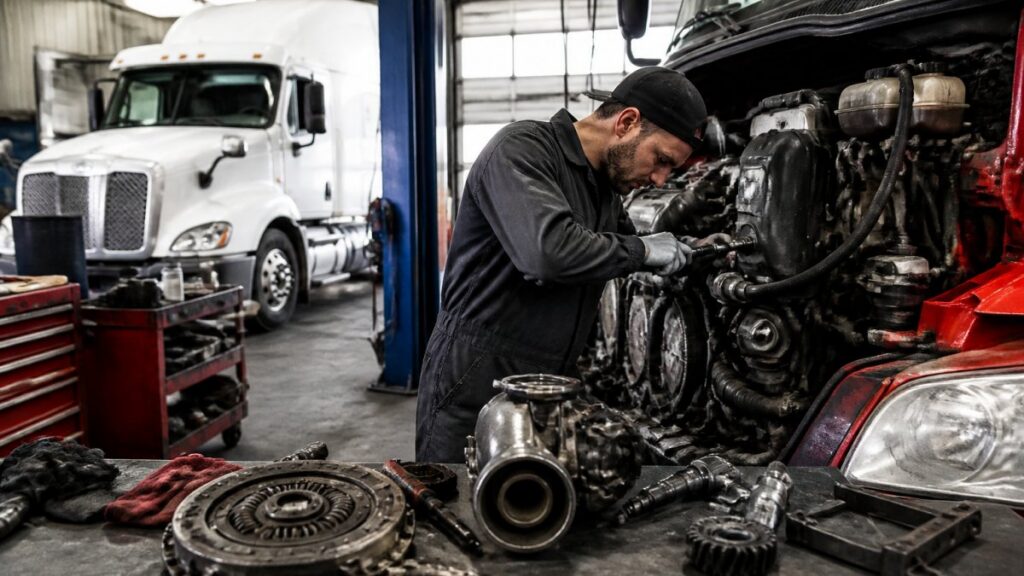
Keeping your commercial truck properly maintained is one of the most important investments you can make in your business. Whether you operate a single heavy-duty truck or manage an entire fleet, routine maintenance helps prevent unexpected breakdowns, reduce costly downtime, and extend the life of your equipment.
But there’s another important reason to stay on top of your maintenance schedule: your Equipment Repair Program may require it.
At Total360, we believe understanding your maintenance responsibilities is just as important as understanding your coverage. Our Equipment Repair Programs are designed to help protect truck owners from unexpected mechanical repair expenses, but maintaining your vehicle according to your agreement is essential.
Here’s what every commercial truck owner should know.
Why Is Preventative Maintenance Important for Commercial Trucks?
Commercial trucks operate under demanding conditions. Long hours, heavy loads, varying temperatures, and constant use put significant stress on engines, transmissions, differentials, and other mechanical components.
Following a consistent maintenance schedule can help:
- Reduce the risk of unexpected mechanical breakdowns.
- Extend the operating life of major truck components.
- Identify potential problems before they become expensive repairs.
- Improve equipment reliability and reduce downtime.
- Maintain accurate service records.
- Support eligibility for covered repairs under an Equipment Repair Program.
Preventative maintenance isn’t just about keeping your truck running. It’s about protecting the equipment that keeps your business moving.
What Are Total360’s Commercial Truck Maintenance Requirements?
Total360’s Component Breakdown Equipment Repair Program outlines specific maintenance requirements for Class 8 and Class 2–7 trucks.
Required maintenance begins on the Agreement Date and continues throughout the coverage period.
Class 8 Heavy-Duty Truck Maintenance
For Class 8 trucks, Total360 requires engine oil and filters to be replaced:
Every 6 months or 35,000 miles (56,327 km), whichever comes first.
The agreement allows a tolerance of 10 days or 2,500 miles (4,024 km).
Class 3–7 Truck Maintenance
For Class 2–7 commercial trucks, engine oil and filters must be replaced:
Every 6 months, 15,000 miles (24,140 km), or 500 engine hours, whichever comes first.
The agreement allows a tolerance of 10 days, 1,500 miles (2,414 km), or 25 engine hours.
Commercial Truck Maintenance Schedule
| Vehicle class | Required oil and filter changes | Agreement tolerance |
|---|---|---|
| Class 8 | Every 6 months or 35,000 miles | 10 days or 2,500 miles |
| Class 2–7 | Every 6 months, 15,000 miles, or 500 hours | 10 days, 1,500 miles, or 25 hours |
These are Total360 agreement requirements, not universal maintenance recommendations for every commercial truck. Always follow applicable OEM specifications and your specific Equipment Repair Program Agreement.
Don’t Forget Transmission and Differential Maintenance
Engine oil changes aren’t the only maintenance requirements commercial truck owners need to track.
Under Total360’s Component Breakdown Equipment Repair Program, transmission and differential fluids must be replaced within 12 months of the Agreement Date.
Additional covered systems, including engine accessories, aftertreatment components, auxiliary power units (APUs), and hydraulics, must be maintained according to OEM specifications.
Keeping up with these services can help protect critical components and maintain compliance with your agreement.
Why Are Truck Maintenance Records So Important?
One of the most overlooked aspects of commercial truck maintenance is documentation.
You may be performing every required service, but without proper records, verifying that maintenance was completed can become difficult.
Total360 requires customers to maintain verifiable service receipts and work orders.
Each maintenance record should include:
- The correct Vehicle Identification Number (VIN).
- Mileage, kilometers, or engine hours at the time of service.
- The date the maintenance was performed.
- Documentation identifying the completed service.
Maintenance must be performed by an OEM dealership or licensed service facility, unless an approved Fleet Maintenance Addendum applies.
Handwritten logs or receipts that cannot be verified by the servicing facility are not accepted under the agreement.
Our recommendation: Use the Total360 Mobile app to save maintenance records, and supporting documentation immediately after each service.
This simple App can make a significant difference when you need to provide maintenance history during a claim.
Can Missing Maintenance Records Affect Your Truck Repair Coverage?
Yes.
Under Total360’s Equipment Repair Program Agreement, failure to complete required maintenance or provide verifiable maintenance records may result in a denied claim.
When a claim is initiated, customers may be required to provide proof of regular maintenance within three days.
This is why keeping accurate service records is so important.
Even if a truck has received routine maintenance, missing or unverifiable documentation can create complications when a repair claim is reviewed.
It’s also important to understand that breakdowns caused by inadequate maintenance, improper lubrication, contaminated fluids, or continued operation of an impaired vehicle may fall outside the agreement’s coverage.
The best approach is to maintain your truck consistently, address mechanical concerns promptly, and keep records of every required service.
What About Fleet Operators Who Perform Their Own Maintenance?
Many commercial fleets have in-house maintenance teams responsible for servicing their vehicles.
Total360 offers an optional Fleet Maintenance arrangement for qualifying customers.
However, fleet maintenance must be approved through a Fleet Maintenance Addendum at the beginning of the agreement.
Fleet operators should confirm approval and documentation requirements before relying on in-house maintenance to satisfy their coverage obligations.
What Happens if Your Truck Breaks Down?
Even with proper maintenance, unexpected mechanical failures can happen.
If your truck experiences a breakdown, taking the right steps can help streamline the claims process.
- Contact Total360 Claims immediately at 888-806-9360 or claims@total360.com.
- Take or tow your truck to an OEM dealership or licensed repair facility.
- Under the standard claims procedure, authorize diagnostics only until Total360 provides written repair authorization.
- Provide the requested diagnostic information and verifiable maintenance records within the agreement’s deadlines.
- Once the claim is approved, the repair facility can proceed with authorized repairs.
Total360 also provides an Express Claims Procedure with different payment and documentation requirements. Always review your agreement before selecting a claims process.
Commercial Truck Maintenance Checklist
Keeping your truck properly maintained doesn’t have to be complicated. Start with these essential habits:
- Schedule engine oil and filter changes according to your vehicle class and agreement.
- Complete required transmission and differential fluid services.
- Follow maintenance requirements for covered components.
- Monitor warning lights, fault codes, and unusual mechanical symptoms.
- Maintain accurate VIN, mileage, and engine-hour records.
- Save all service invoices and work orders.
- Keep your odometer and ECM functioning properly.
- Confirm Fleet Maintenance Addendum approval if applicable.
- Review your Equipment Repair Program Agreement regularly.
A consistent maintenance routine helps protect both your equipment and your business.
Frequently Asked Questions About Commercial Truck Maintenance
How often should a Class 8 truck have its oil changed?
Under Total360’s 2026 Component Breakdown Equipment Repair Program, Class 8 trucks require engine oil and filter replacement every six months or 35,000 miles, whichever comes first. A 10-day or 2,500-mile tolerance applies.
How often should a Class 2–7 truck have its oil changed?
Total360 requires oil and filter replacement every six months, 15,000 miles, or 500 engine hours, whichever comes first. The agreement includes a limited tolerance.
Does Total360 require maintenance records?
Yes. Customers must maintain verifiable service receipts or work orders documenting the VIN, service date, and mileage, kilometers, or engine hours.
Can I perform my own fleet maintenance?
Qualifying fleet operators may be eligible for an approved Fleet Maintenance Addendum. Approval must be obtained at agreement inception.
Can improper maintenance result in a denied claim?
Yes. Total360’s agreement allows coverage to be denied when required maintenance is not performed according to the agreement. Other exclusions and claim requirements also apply.
Does Total360 pay for routine maintenance?
No. Routine maintenance and cleaning are not covered expenses under the Component Breakdown Equipment Repair Program.
Protect Your Truck. Protect Your Business.
Your commercial truck is more than a vehicle. It’s an essential part of your business.
Routine maintenance helps keep your equipment operating reliably, reduces the risk of unexpected breakdowns, and supports your ability to meet the requirements of your Equipment Repair Program.
Total360 offers flexible Equipment Repair Programs for Class 2–8 commercial trucks, with multiple coverage tiers, unlimited-mileage term options, and coverage for hundreds of listed components depending on the program selected.
Whether you’re an owner-operator, fleet manager, or commercial truck dealership, understanding your maintenance responsibilities is an important part of getting the most from your coverage.
Keep your truck maintained. Keep your records organized. Keep your business moving.
Learn more about Total360 Equipment Repair Programs at Total360.com.
Disclaimer: This article summarizes selected maintenance and claims provisions from the Total360 Component Breakdown Equipment Repair Program. It is not a substitute for the signed agreement. Coverage, exclusions, maintenance requirements, claim procedures, and eligibility are governed by the applicable agreement.